Once again, we were honored with many well-known faces on our red carpet. You can find a collection of pictures (©SciBall/R. Ferrigato) here:
Category Archives: General
Ball magazine 2019 online!
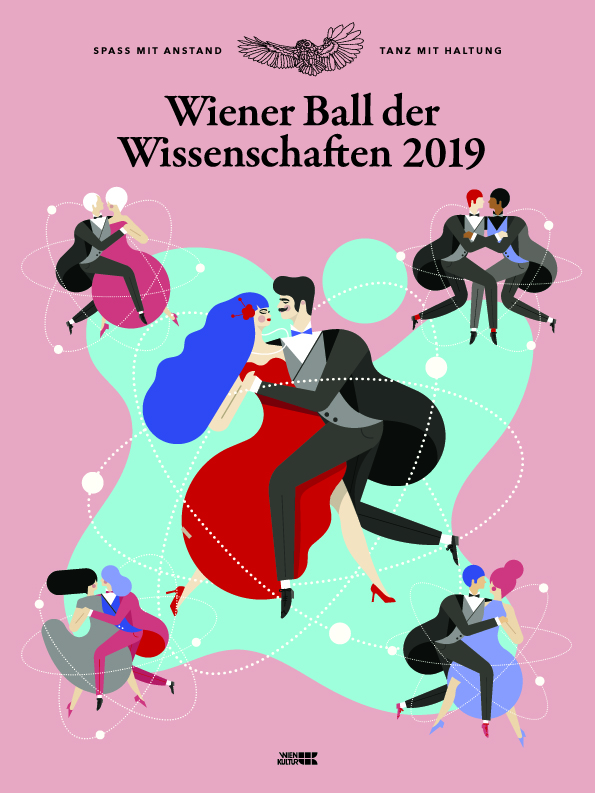 Our diligent assistents had no more bags to hand out even before the ball ended–due to the interest of our ball guests. Whoever has did not have the chance to read through our 68 page long ball magazine, can now download the pdf edition! Excellently edited by Katharina Kropshofer it features all the ball events, from local superfoods to Esrap’s midnight lecture. Enjoy the read!
For the download please click here: SciBall_Mag_2019 WEB
Where can we find you at the ball, Karl-Heinz Wagner?
Goji berries, chia seeds or quinoa: They all belong to the group of so-called superfoods. At the 5. Wiener Ball der Wissenschaften – 5th Vienna SciBall, Prof. Karl-Heinz Wagner (University of Vienna) will provide tasty insights into the world of local superfoods. In this video (produced by our partner SPOTTERON) he talks about misbeliefs in his discipline:
Where can we find you at the ball, Hannah Lutz?
Hannah Lutz, ball ambassador and chair woman of the Austrian National Union of Students federal body of Representatives will also attend the ball. In this Video (produced by our partner SPOTTERON) she talks about the special symbolic the Ball of Sciences holds and its special roles in comparison to other balls:
Highlights at this year’s ball
Spectacular experiments and stunning presentations are turning the townhall once again into an experimental arrangement of an amusing thirst for knowledge.
No Science Ball without a premiere: On the 26th of January, at the 5th Vienna Ball of Sciences, it will be possible for the first time to also use the “Volkshalle” on the ground floor – additionally to the ballrooms in the “Beletage”. This way we are accomodating around 3.600 guests. Just like in the previous years, also this year’s ball will be sold out.
Where can we find you at the ball, Franz Kerschbaum?
Our ball ambassador Franz Kerschbaum, astronomer at the University of Vienna, has already proven his photography skills. In this video he also reveals that he is a great talker and where You can find him at the ball. It was produced by our partner Spotteron, who already worked with us last year. But you can see for yourself:
Sold out!
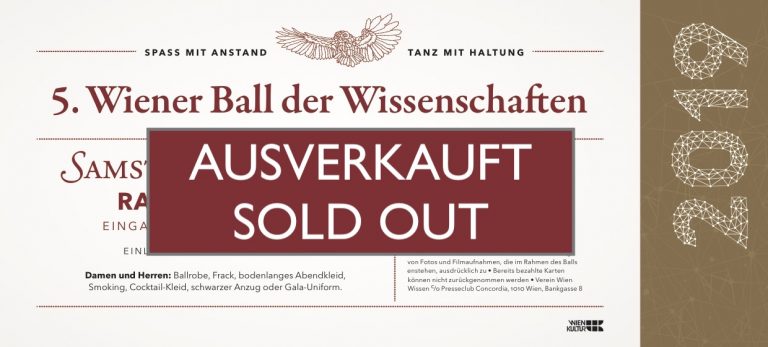
SOLD OUT! We hereby announce that all our tickets for the Vienna Ball of Sciences 2019 (26 January 2019) are from now on sold out. A few tables (incl. 8 tickets) are still available in our webshop.
For this reason there will be no box office at the Rathaus on the night of the ball. Therefore, all booked and payed tickets have to be picked up by 25 January from our ball office at the bookshop Kuppitsch (Schottengasse 4, 1010 Wien). Opening hours are Monday – Friday, 15.00-18.30. Our desk is in the basement.
Student Tix sold out!
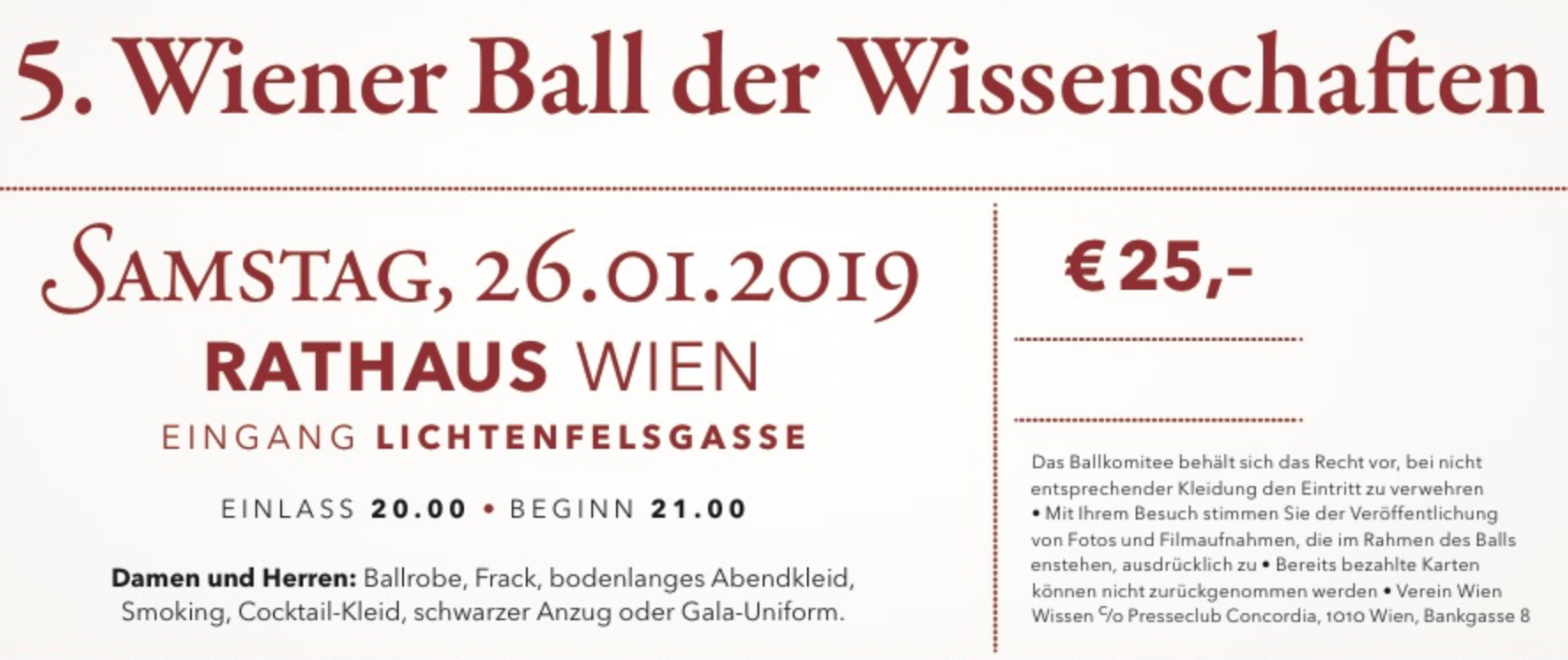 Even though we raised the number of available tickets, our student tickets are sold out already! You can still get regular tickets for the prize of 90€. Additionally, you can win a student tickets until Sunday, 13th of January 2019, by liking ESRAP’s video on our Facebook page. For regular bookings: Webshop.
ESRAP at the Vienna Science Ball 2019!
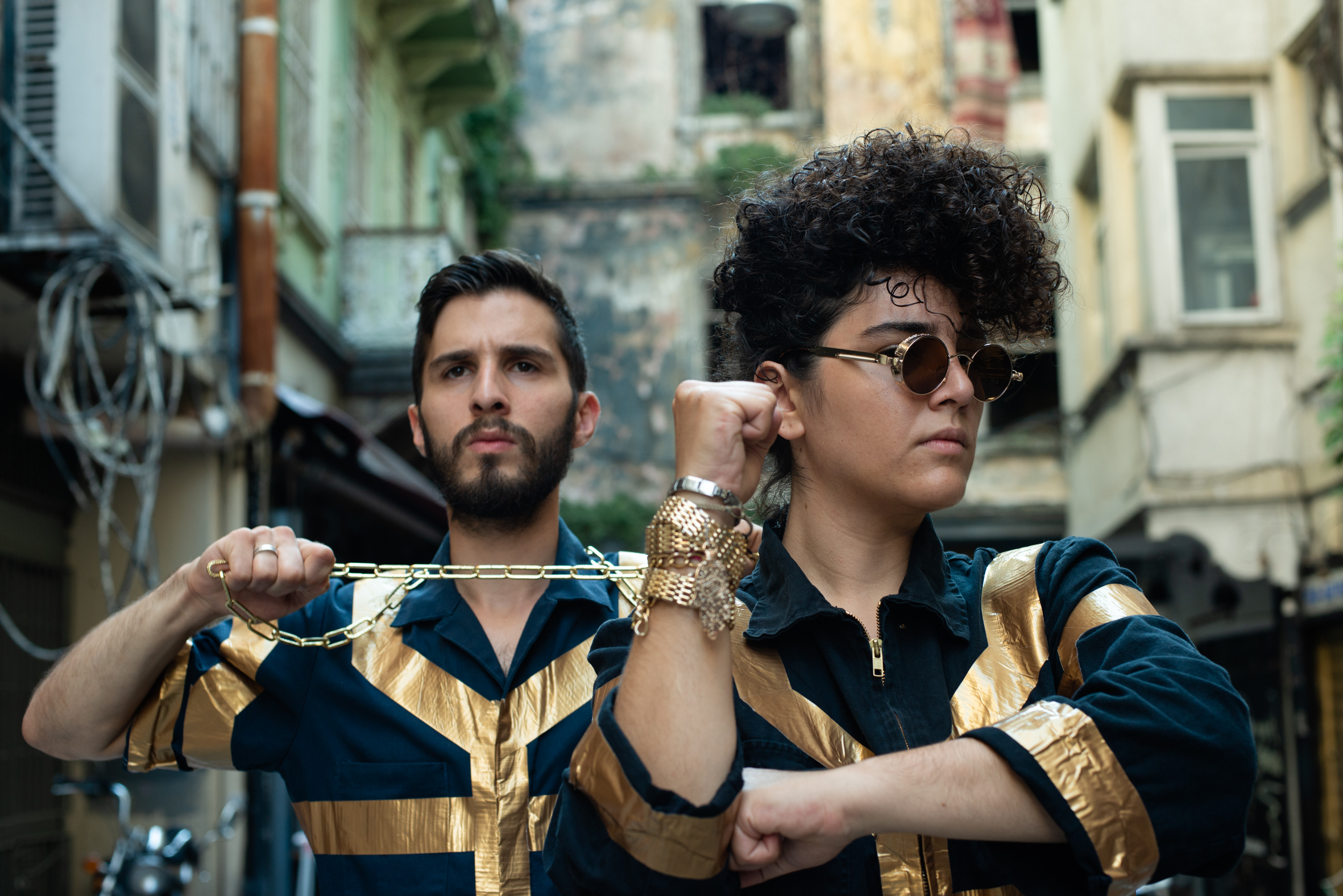 Check it out! At 1am our guests will have the pleasure to experience a lecture never seen before. Esra Özmen is not only part of the rap duo ESRAP, she is also a doctoral student at the academy of fine arts vienna. In her dissertation she discusses the rise of rap in Vienna’s outer districts. Recently, their new single “Kabadayi – Die Tage werden besser” was released; they are also looking for support for their new album with a crowdfunding project. She left us her somewhat different message:
Esra also told us how it is to grow up in Vienna, handling a mixture of identities: as an Austrian, turkish woman, rapper and scientist. You can find the long version of the interview in our ball magazine, which will be distributed on the night of the ball.
How did the story of you and rap begin?
My parents come from Turkey, me and my brother were born here and grew up in a classic guest-worker flat in Ottakring. In secondary school I was one of 24 migrants within 25 students in total. When I later changed schools to go to a Gymnasium, the tables had turned: Suddenly I was the only foreigner out of 24 Austrians and told to just speak German. It hurt but back then I didn’t know why it did. The daily, subtle racism brought me to start writing texts. Later my brother joined and added the arabesque, this suffering singing. I always say that through arabesque we felt that we were suffering and through rap we found out why we did. That’s how we started to make music.
2011 you brought out a single called ‘Ausländer mit Vergnügen’ (‘Foreigner with Pleasure’). Has being a foreigner changed since then?
After graduation I started to study at the academy of fine arts. Everytime I am with my fellow students I am experiencing less racism becasue we are all from different countries anyways. But I do see it, especially when I have to go to administrative offices or when I am with my mum who wears a headscarf. That’s why I would say that I am still a ‘foreigner with pleasure’.
Are you handling it differently now?
I am more confident and address it more. Take as an example the police check, when officers inspected a rapper last year in the seventh district of Vienna without a particular reason. It showed many people that you can also fight back. But often it is up to us migrants to show, that we don’t have to put up with it. We also address this at workshops in youth centres or schools. Being political is a privilege though. I was basically raised in the park and wouldn’t be the same, if I was still hanging out there all the time.
Has your music changed as well, since you started to study?
Yes, I used to write with more gut instict. For some time I threw away everything I wrote cause I thought, somebody could misunderstand it. If today, I write a song called ‚Der Tschusch ist da‘ (pejorative term for a Slav or “oriental” person), I have to pose questions to myself as well: Why am I writing this? What does the word even mean? I got a lot of constructive critique from people around me. People told me that they were trying to avoid this word and here I am, just laying it on the table again. That is true. But it was my intention to turn the word around. I am proud to be a ‘Tschusch’ and I dont see it as an insult, but rather a confirmation.
Is there something rap can do, that science can’t?
Rap can reach people that science does not reach. All the teenagers in the 16th district listen to it, but they would never read books about it. We also never had any at home, not even newspapers. It’s a pity that rap is often connected with images of coke and women. That could change. I am realising for example that people around me start to occupy themselves more with my texts. They come to me and ask, if it is okay that somebody called them a ‘Tschusch’.
And the other way around: Can you reach people with your science that you can’t with your music?
I am sure there are people that would never listen to me if it wasn’t for a scientific context in which they get to know me. I can also tell that I am taken more seriously since I started studying. But I do have problems with the scientific language. Often I feel like people write in a complicated way on purpose, so that only a small group of people can read it. It reminds me of the opera: Some brag with knowing things about it, for others it means nothing.
Interview: Katharina Kropshofer
Foto: Daniel Shaked
Congratulations to Nuno Maulide!
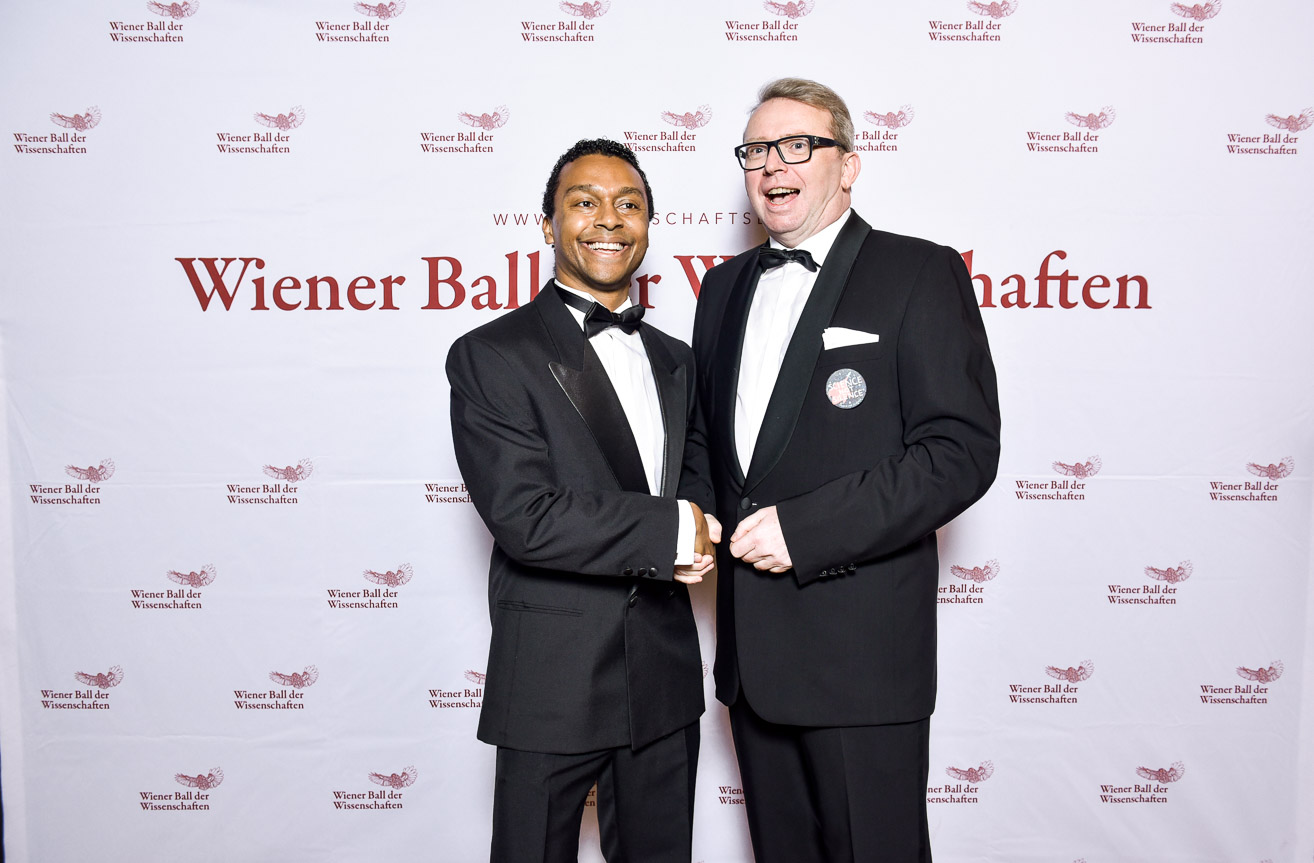
Our ball ambassador 2018 is scientist of the year 2018! We congratulate Nuno Maulide on this honour awarded by the Club of Educational and Science Journalists. Since 2013 Maulide (in this picture on the Red Carpet 2018 next to ball organiser Oliver Lehmann) is Professor for Organic Chemistry at the University of Vienna. As a member of the Young Academy which is part of the Austrian Academy of Sciences, he was already awarded with a second ERC grant in 2015, the most prestigious research fellowship by the European Union. Additionally, he has earned merits for the Children’s University Vienna and as a pianist. He is being honored as an excellent science communicator by Austria’s science journalist.
Nuno Maulide’s message as a ball ambassador 2018.