Category Archives: Ballbotschaften

Mirta Galešić: “Together we can do so much”

Photo: Anja Böck

In this complex world full of uncertainty, it is easy to feel overwhelmed and powerless. However, a big problem might not need one big solution. Complex social systems are often shaped by many seemingly insignificant actions of individuals and small groups that accumulate over time. Everyone’s actions matter. Eventually, one of them might tip the system into a better state. Continue reading Mirta Galešić: “Together we can do so much” →
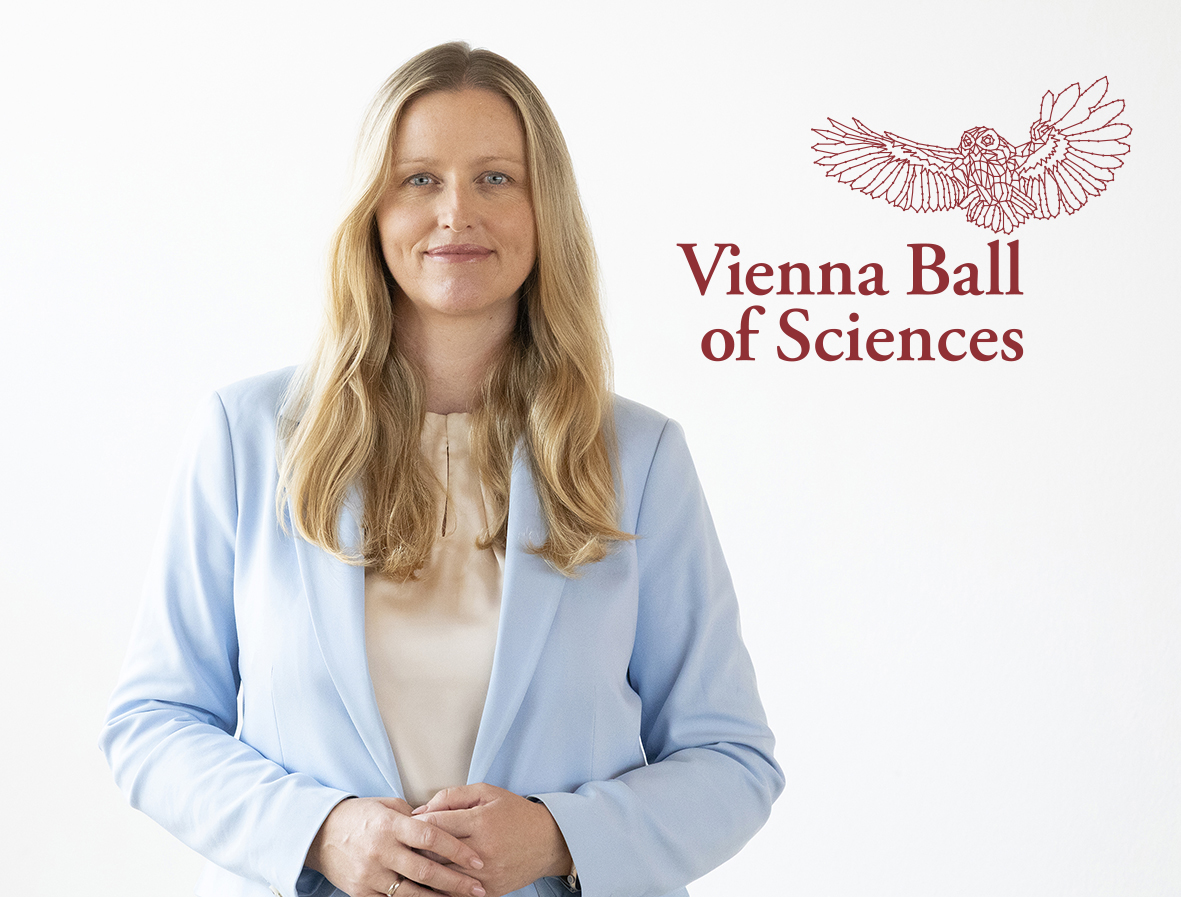
Daniela Ecker-Stepp: “Knowledge Gains Value When It Is Shared”

Photo: intotheblue.studio

Science broadens our horizons. It helps us understand the world better and make informed decisions. Yet its full potential can only be realised when scientific findings are not confined to academic circles but are accessible to everyone. The Vienna Adult Education Centres have been fulfilling this educational mission for many decades, making scientific knowledge accessible to all. Continue reading Daniela Ecker-Stepp: “Knowledge Gains Value When It Is Shared” →

Suzana Jovičić: “Connecting Doesn’t Always Require Words”

Photo: Thomas Sobottka

In my research at the intersection of digital and psychological anthropology, I explore how people engage with digital technologies. My questions often take me far beyond the screen. In my current science communication project “Dreamscapes”, funded by the Austrian Science Fund (FWF), we take experiences of addiction as a starting point for broader societal questions: What draws us into digital spaces? And what do these attractions reveal about social tensions, rather than merely about supposed individual shortcomings? Continue reading Suzana Jovičić: “Connecting Doesn’t Always Require Words” →

Viktoria Kudrna: “Celebrating science is more important than ever!”

Photo: Cajetan Perwein

Last autumn was marked by budget cuts. University funding fell €2 billion short of what would have been needed to maintain universities at their current level. As the Austrian Students’ Union (ÖH), we have always stood for academic freedom, a broad range of research and fully funded education. We upheld these demands during the budget negotiations and afterwards. For us, one thing is clear: Cutting funding for our universities, students and staff is the wrong approach. The negative consequences will be felt for a long time to come. Continue reading Viktoria Kudrna: “Celebrating science is more important than ever!” →

Johanna Sebauer: “Beware of the Know-It-Alls”

Photo: Pamela Rußmann

For six years, I worked at a media research institute. Not as a researcher, but in the “science communication” department – roughly speaking, the press office. One of my responsibilities was producing the institute’s own podcast. Once a month, I spoke to journalism researchers, media lawyers or media sociologists about their work. Sometimes we discussed the findings of a brand-new study, sometimes broader questions about current social issues. “What is social media doing to our children?”, “What does the future of public service broadcasting look like?”, “How can we hold major online platforms accountable for the content posted on them?” Continue reading Johanna Sebauer: “Beware of the Know-It-Alls” →

Eva-Maria Holzleitner: Democracy and science

Photo: BMFWF

When democracies falter, universities and researchers are often the first targets. Those who demand conformity fear those who ask critical questions. Conversely, this means that strong, resilient democracies need science. And also: science needs a democratic environment to flourish. Democracy and science are based on the same fundamental values: evidence, openness, dissent, and the capacity to learn. Continue reading Eva-Maria Holzleitner: Democracy and science →

Günther Mayr: Let’s dance and do science

© ORF

Every time I enter the University of Vienna, I am immersed in an aura that has shaped my life. It was not only at the Alma Mater Rudolphina that I received my academic consecration. There, I was able to get to know a scientific community that has been and continues to be shaped by brilliant minds over the centuries. Through the university, I also got to know and appreciate the city of Vienna—and there was no shortage of partying in student life in the Austrian capital. Continue reading Günther Mayr: Let’s dance and do science →

Alice Barbora Tumpach: Waltzing with Pauli to Vienna

Alice Barbora Tumpach with WPI Director Norbert Julius Mauser and Fields Medalist Pierre-Louis Lions, January 9, 2026, at the French Embassy on the occasion of the ceremonial signing of the agreements for the fifth extension of the “Institut CNRS Pauli.” / Photo: WPI

My journey takes me from Paris to Lille to Vienna, from pure mathematics to machine learning and biomedicine. I took a leap into the unknown with three children and have no regrets. The Wolfgang Pauli Institute (WPI) was a tireless catalyst and source of support throughout. Continue reading Alice Barbora Tumpach: Waltzing with Pauli to Vienna →

Georgia Avarikioti: Communication as ethical responsibility

In our increasingly digital society, much of what we do depends on systems we do not see but constantly rely on. These infrastructures shape our everyday decisions: which services we trust, how we exchange goods, how securely our data is handled, and how and which information reaches us. When such systems are reliable and transparent, they empower citizens, strengthen democracy and our trust in our institutions; when they fail, the consequences ripple far beyond technology. Continue reading Georgia Avarikioti: Communication as ethical responsibility →

Francesca Ferlaino: An ultracool laureate

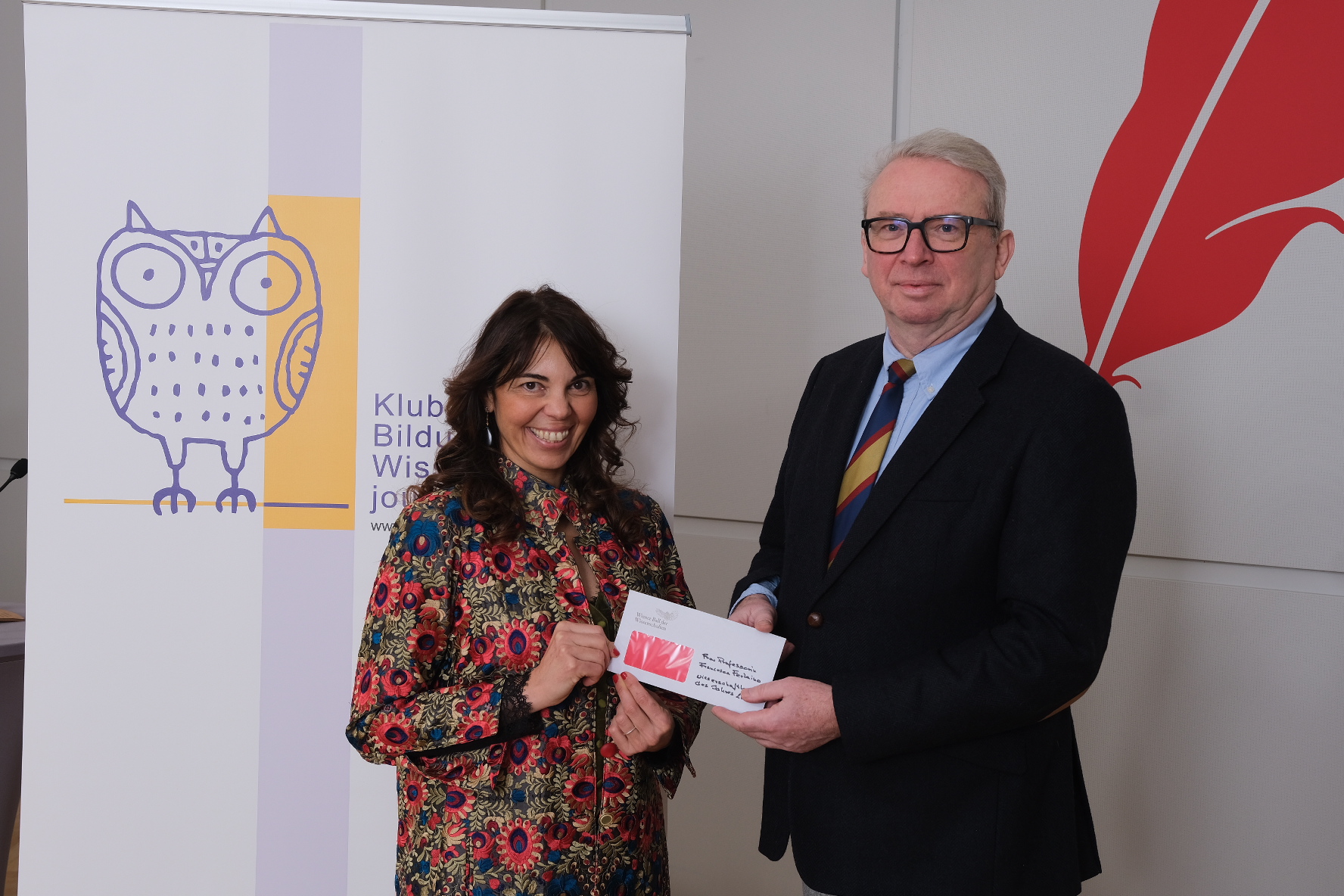
In addition to the award as Scientist of the Year, Francesca Ferlaino was also presented with honorary tickets for the Science Ball by organiser Oliver Lehmann / © R. Ferrigato

The new Scientist of the Year 2025 knows the Science Ball from her own experience. Last year, Francesca Ferlaino was a member of the team of Austrian quantum physicists who presented their QuantA network with a spectacular presentation in the ballrooms. Ultimately, it is this inclination and ability to communicate highly complex concepts in a popular way that earned Ferlaino the award from the Club of Education and Science Journalists, which was presented to her at the Concordia Press Club on January 7 – together with honorary tickets for the ball. Continue reading Francesca Ferlaino: An ultracool laureate →