In this complex world full of uncertainty, it is easy to feel overwhelmed and powerless. However, a big problem might not need one big solution. Complex social systems are often shaped by many seemingly insignificant actions of individuals and small groups that accumulate over time. Everyone’s actions matter. Eventually, one of them might tip the system into a better state.
For example, in a study with colleagues from the Universities of Graz, Konstanz, and Arizona, we found that a small act of simply stating that you disagree with a toxic comment somebody posted online is the best way to reduce online hate. No need for elaborate arguments or righteous anger – in fact, it is better to keep it short and simple.
At the Complexity Science Hub, we study how societies adapt to the various challenges we face, and how these adaptations – psychological, institutional, and technological – affect us in turn and create new challenges. Our research group, Collective Minds, investigates among other things individual and collective belief systems, societal effects of anticonformity, good and bad leaders, and AI advisors.
Much like medicine and physics a century ago, social science is entering a new era, driven by unprecedented access to data, computational power, and collaborations across the social and computational sciences. We can finally start answering the big questions of our time in a rigorous way, such as why our societies sometimes become trapped in conflict, passivity, or self-destruction, and how we can change our decisions and communication patterns to better deal with the many interconnected problems we face.
To think big, one needs a big network of brilliant minds across many disciplines. The Vienna Science Ball is the perfect place to connect with excellent scientists we might otherwise never meet. As Helen Keller said, “Alone we can do so little, together we can do so much.” Let’s talk science and dance!
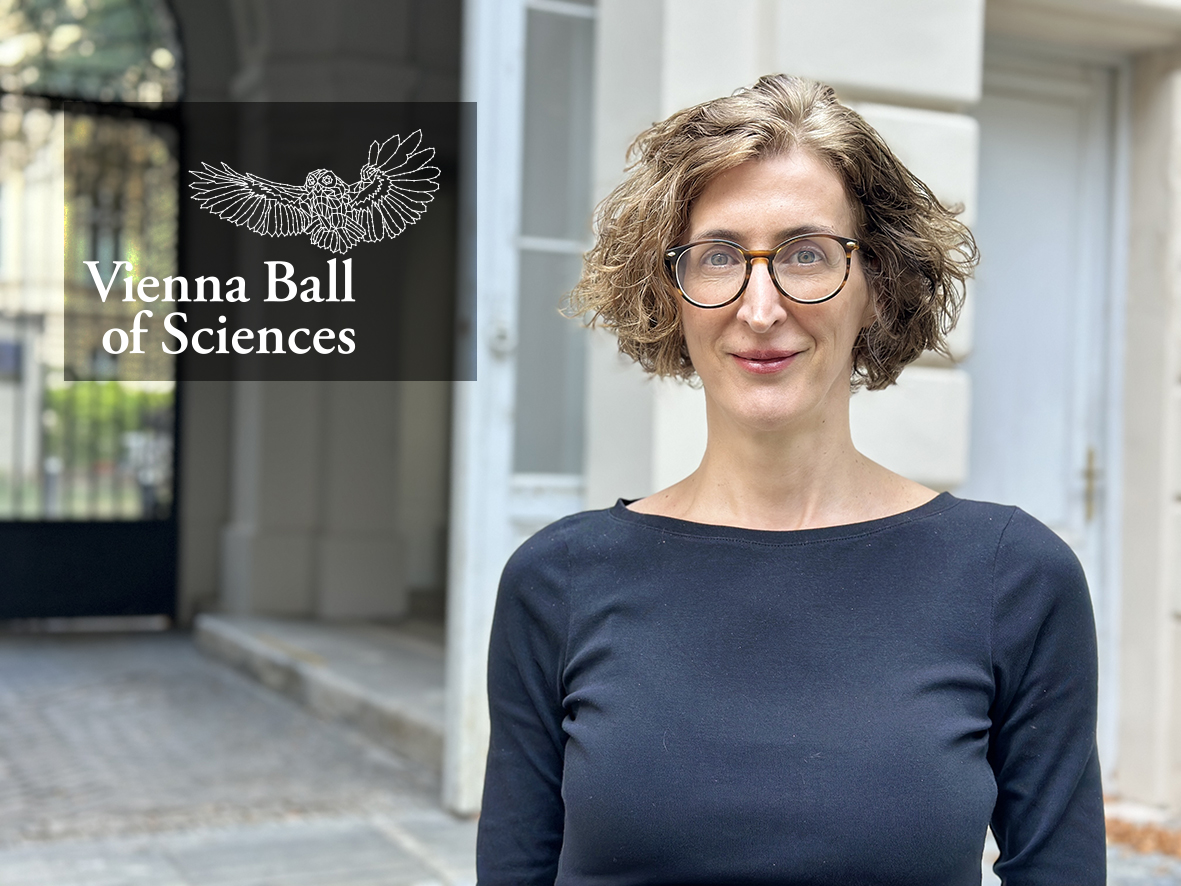
Mirta Galešić was born in 1974 in Zagreb, in what is now Croatia, and studied psychology at the Universities of Zagreb, Michigan and Maryland. She has worked at the Max Planck Institute for Human Development in Berlin and the Santa Fe Institute, among other institutions. Since 2023, she has been conducting research at the Complexity Science Hub in Vienna. She received an ERC Advanced Grant for a research project on collective adaptation.