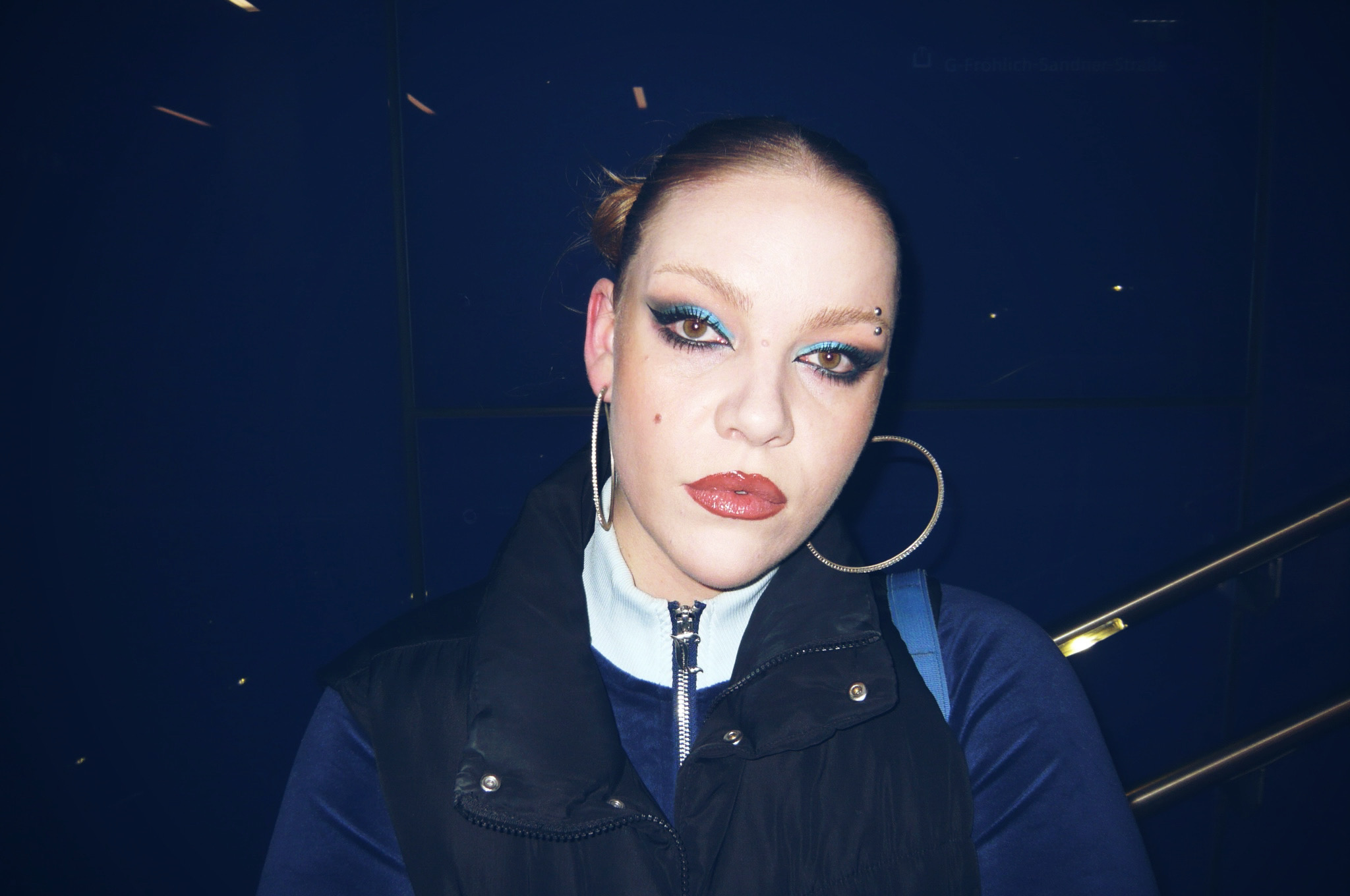
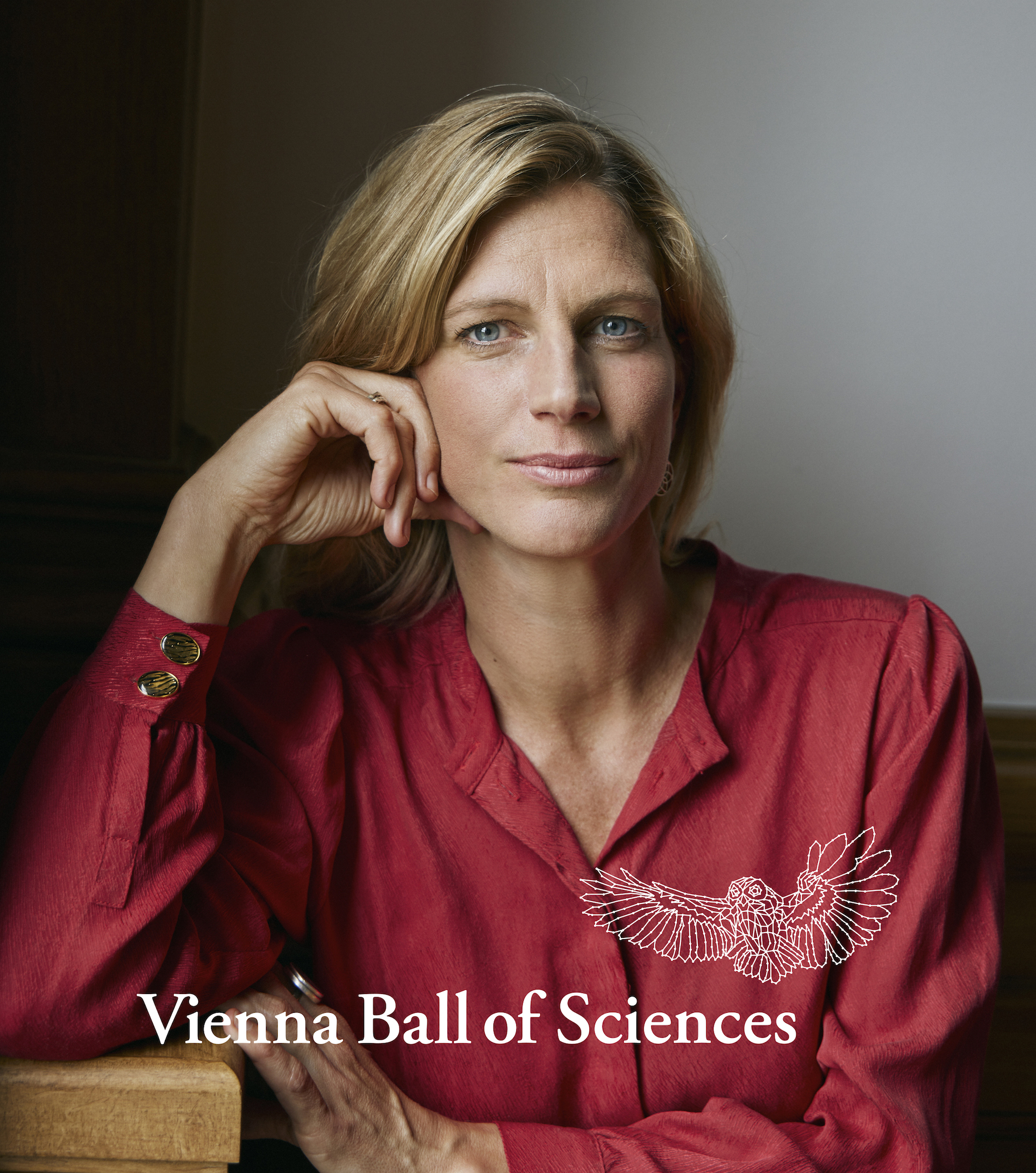
A rapper who lives between “street filth and Beverly Hills”. With sharp lines, social criticism and an unagitated style, Donna Savage is conquering the German rap scene: she studies, lives art and asks herself questions that others would rather not ask. In her sound, anger meets reflection – and opens up space for change. This will be the case at #SciBall25 at 1:00 a.m. when she performs at the disco. Continue reading Clear the Stage for Donna Savage→
Katia Ledoux is the sensation of the season. The opera singer is a guest at the Science Ball for the first time. And she exceeds all expectations here too.
It is an evening that will go down in the annals of opera. Wiener Volksoper, February 1, 2023: Katia Ledoux is on stage, unlike planned. The 32-year-old mezzo-soprano is supposed to play Venus in Jacques Offenbach’s “Orpheus in the Underworld”. Just Venus. Just her role. But when Orpheus and his understudy both fall ill, Ledoux takes on both parts – mezzo-soprano and tenor, femininity and masculinity, goddess and human. Without rehearsal, straight into the spotlight. The next day, the world is talking about her. Not only in Vienna, not only in opera circles. Everywhere. Women singing male roles? It happens, but it’s rare. Continue reading The voice that breaks all chains→
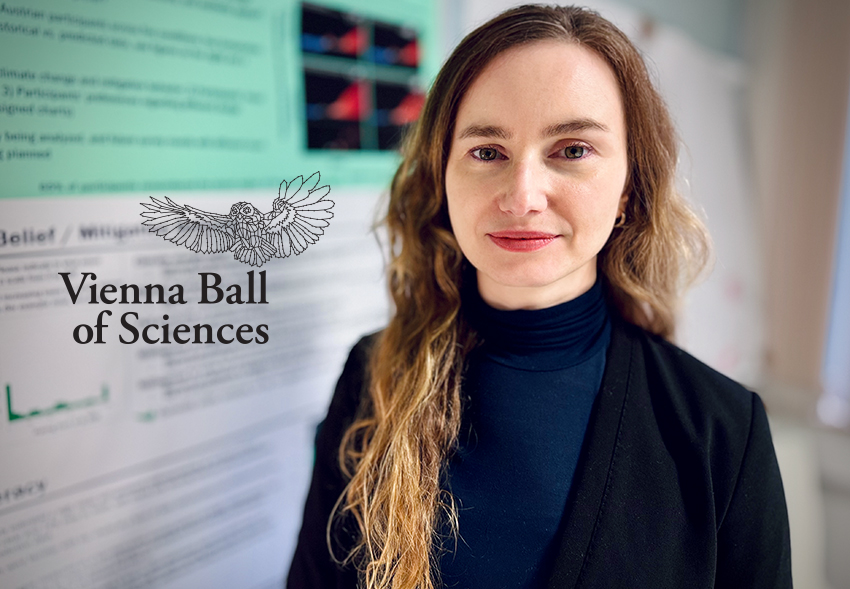
My research focuses on the emerging field of human data interaction, which is closely connected to the development and the application of Artificial Intelligence. I examine how people interact with data, perceive it and understand it. Continue reading Laura Koesten: Exploring the world with data→
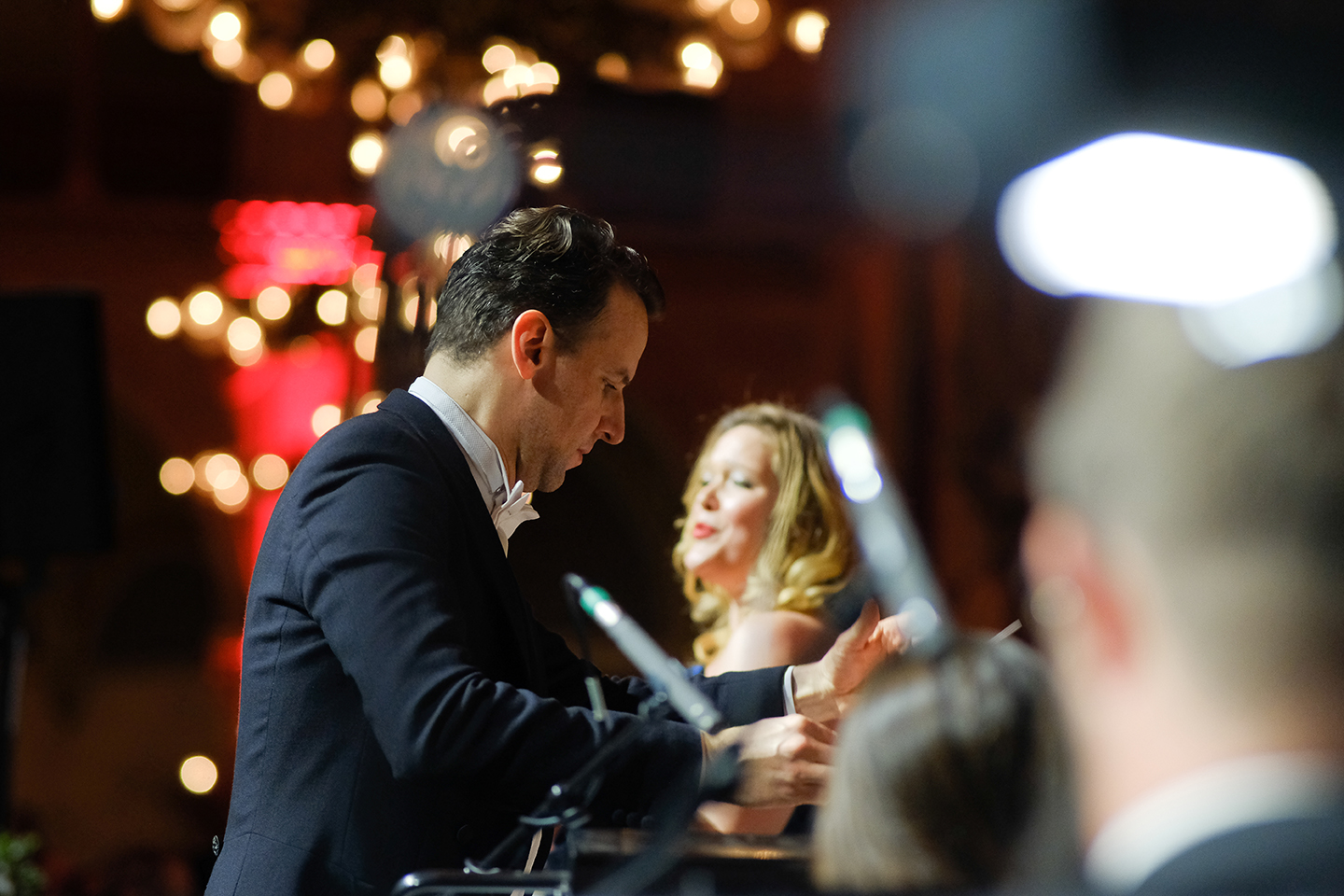
Maestro Vinzenz Praxmarer with soloist Anne Wieben at the ball 2020 / Photo: R. Ferrigato
Johann Strauss the younger is a classic of popular music and therefore a must at every Viennese ball. Especially in the anniversary year of his 200th birthday. But the Divertimento Viennese ball orchestra, under the direction of Vinzenz Praxmarer, will be offering not only the greatest hits such as the Blue Danube Waltz but also a special surprise as a ball overture: Erich Wolfgang Korngold’s “Straussiana” from 1953, a potpourri of rather unknown melodies by the Waltz King, which the composer masterfully condensed into a tribute. Continue reading Discovery at the anniversary→
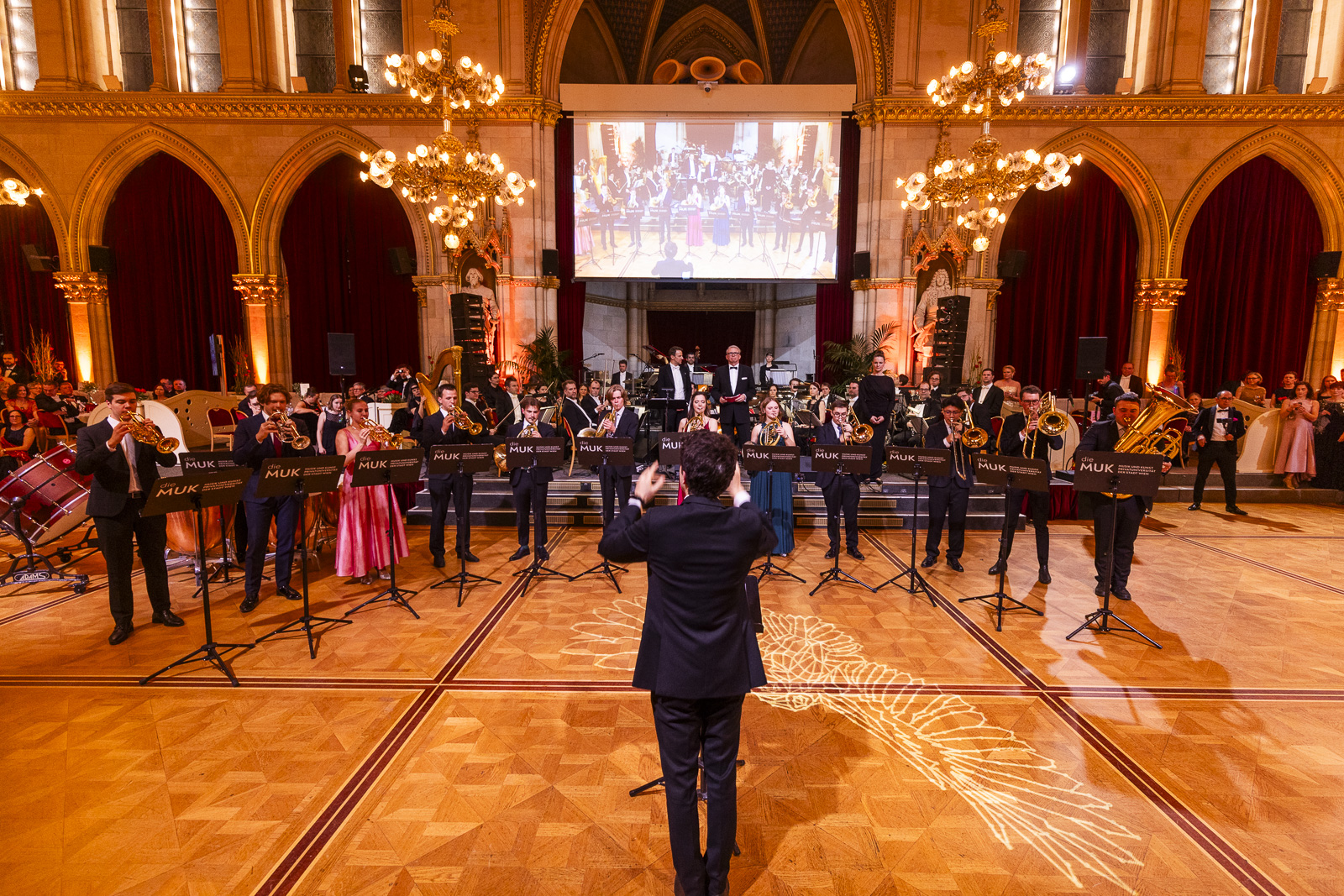
The MAK fanfare at the #SciBall24 / Photo: R. Ferrigato
The Music and Arts Private University of the City of Vienna (MUK for short) has accompanied the Science Ball from the very beginning. And this is to be understood literally. Every year, students specially compose fanfares which form the prelude to the opening. Student Laura Oos (born 2003) has composed a “Fanfare for the Scientists” especially for this year’s anniversary, which will be performed by students from the Jazz, Wind Instruments and Percussion departments under the direction of the composer. And that’s not all. At midnight, Alexandra Danilova (soprano), Ghazal Kazemi (mezzo-soprano), Malo Peloffy (tenor) and Aleksandr Ivanov (bass) will accompany Beethoven’s “Ode to Joy” with the Divertimento Viennese ball orchestra.
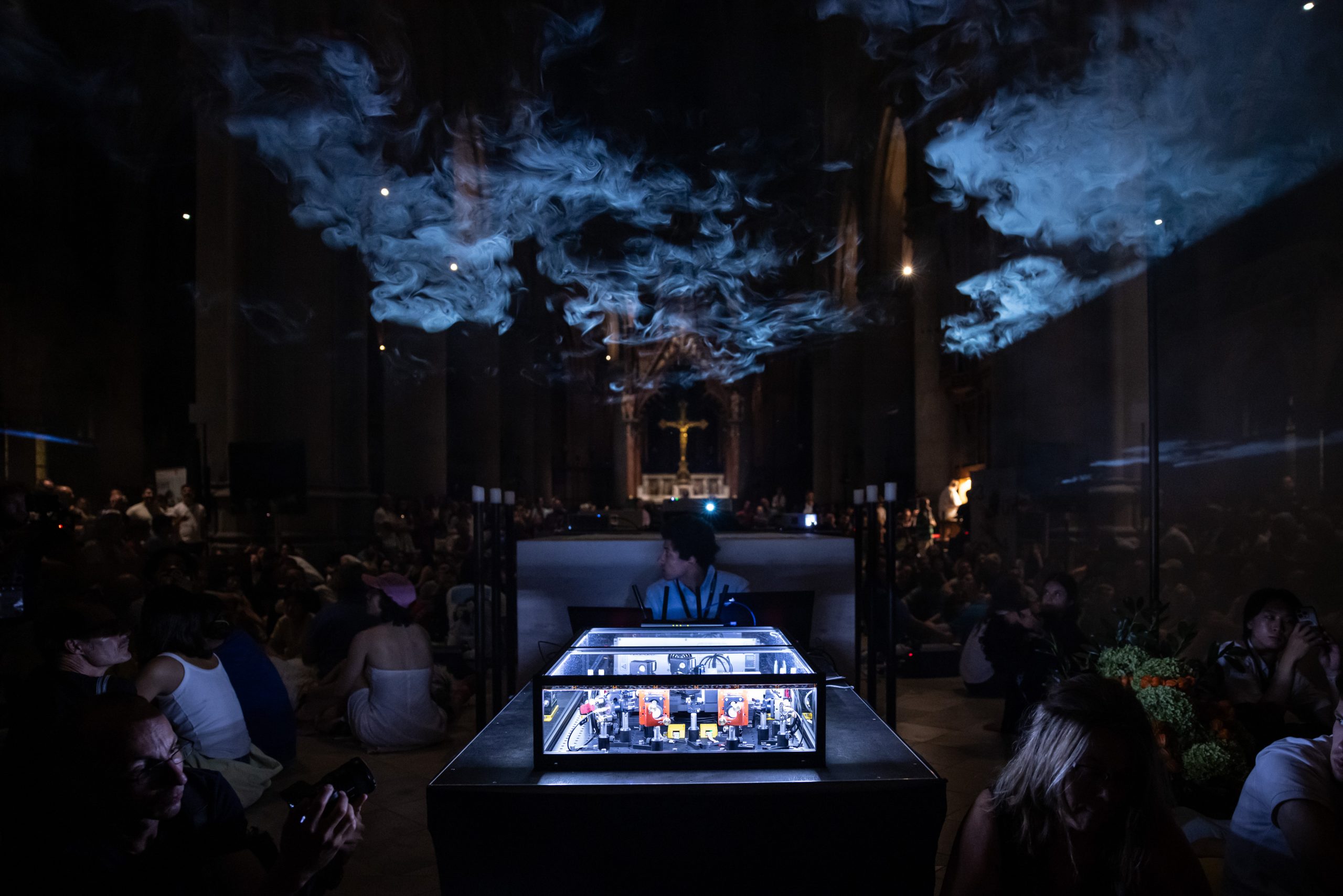
How does one make quantum entanglement resonate? A few young physicists and artists from Vienna have attempted exactly that. They call their project „Sounds of Entanglement.“ A show in which entangled photons take on the role of the conductor.
A report by Sebastian Lang
“Sounds of entanglement” in the Linz cathedral as opening act of the Ars Electronica festival / Photo: Ars Electronica
For a long time, physics was considered a realm of predictability. Everything neatly cast in formulas, a clockwork that one only needed to study long enough to fully understand the world. But then came quantum physics, along with chance. Suddenly, nothing was certain anymore. You can know a particle’s position or its velocity–but never both at the same time. Thanks to Heisenberg’s uncertainty principle. Einstein hated this, calling it „spooky action at a distance.“ Continue reading What does chance sound like?→
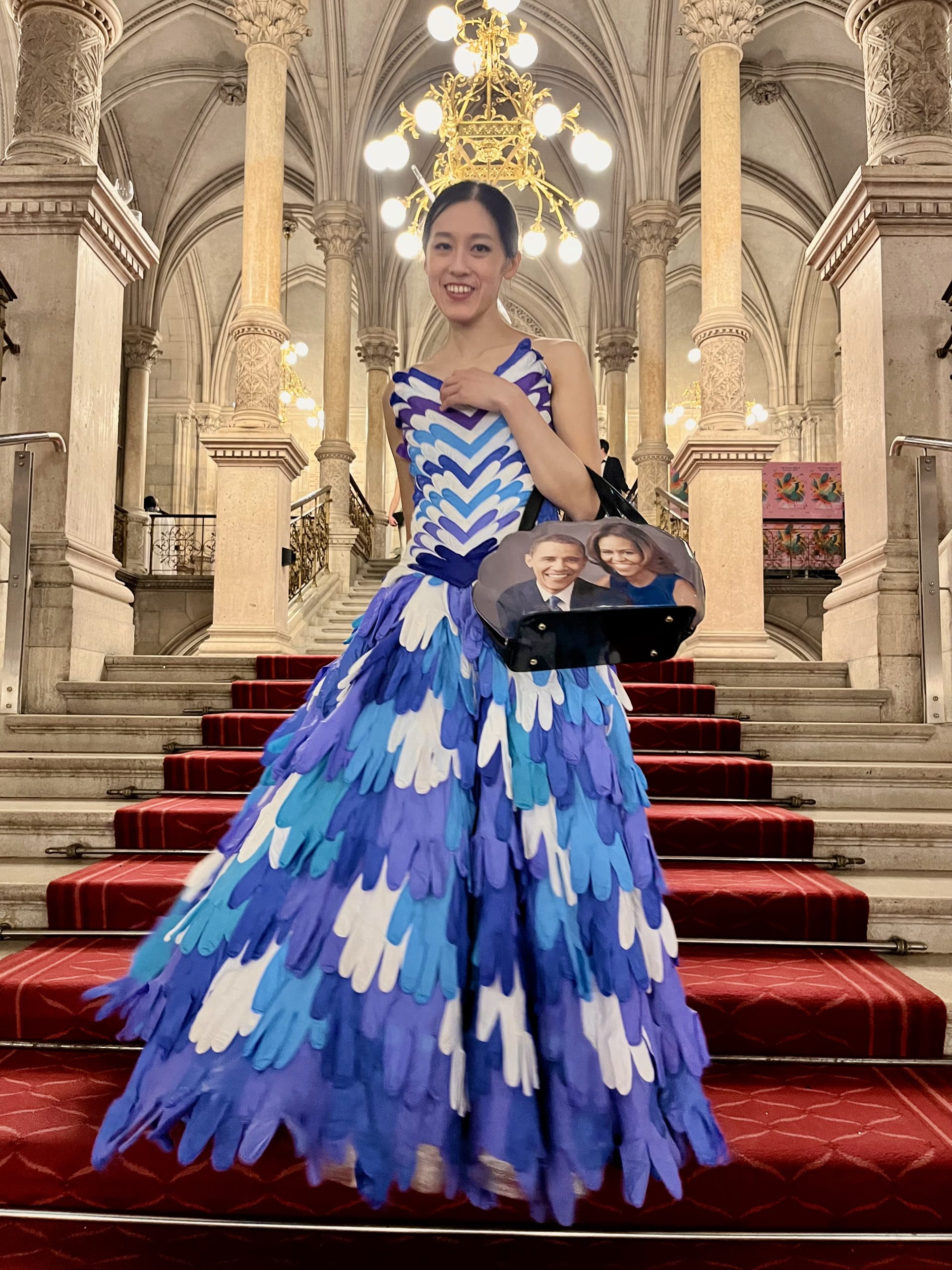
Saki the Artist in a self-sewn dress, primarily made of single-use gloves stitched together. / Photo: Toma Susi
Saki the Artist believes that art has a job: to fight against waste. In her studio, leftovers from laboratories pile up like souvenirs of an industry that doesn’t think about tomorrow – pipettes, gloves, petri dishes. Things that would otherwise end up in black trash bags become dresses and installations. The artist, who moved from California to Vienna in 2023, combines her biotech past with creativity. It’s not about beauty for her. It’s about reimagining science in a more sustainable way. Continue reading Saki the Artist: Art from upcycled lab plastics→
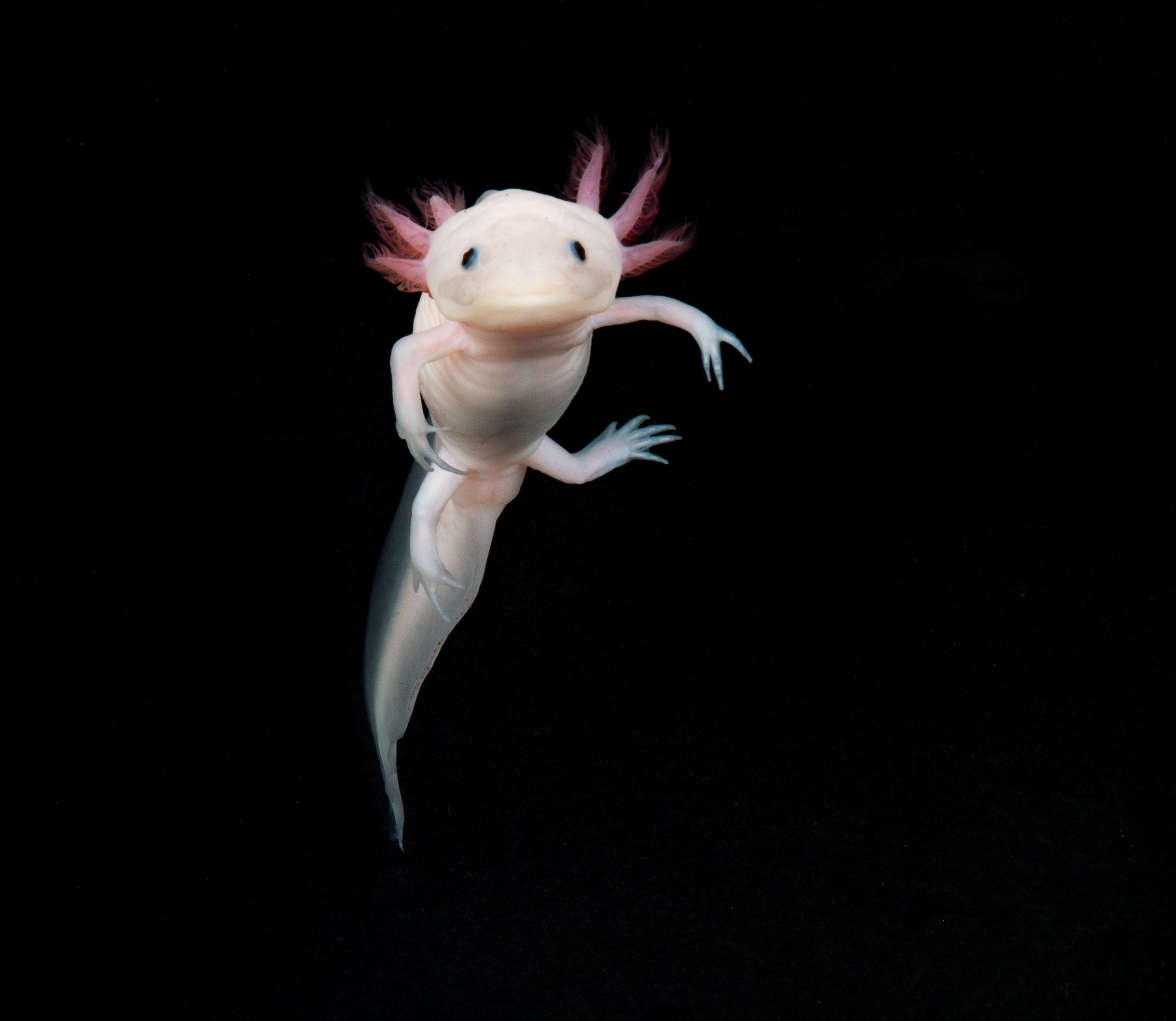
Instagram-worthy species glamour at the Ball of Sciences. Beyond its significance for research, the subject holds a unique aesthetic allure that will be magnified on the evening of the ball.
The axolotl measures around 28 centimeters in average length, about the same as a golden hamster. It remains in its larval form throughout its life and reaches sexual maturity without the usual metamorphosis. / Photo: IMP-IMBA Graphics
The natural history collections of the Natural History Museum Vienna (NHM) are far more than mere exhibits. They are fragile time capsules, living laboratories, and places where the past, present, and future intertwine. With over 30 million objects, the NHM is a true archive of biodiversity and a source of inspiration for science and society. Here, nature is systematically recorded, its diversity documented, and the molecular signature of life deciphered. Every stone, every display case, and every specimen tells a story of the interplay between nature, science, and humanity. Continue reading Photo op with the axolotl→
One thing we have realized in recent years is how important legitimizing narratives are for shaping social design and change. Science communication plays a central role if these narratives are to be supported by evidence. Particularly in times of upheaval, we see the temptation to ignore unpleasant changes in reality in order to offer known and simple solutions. Continue reading Maja Göpel: Lots of positive vibes→
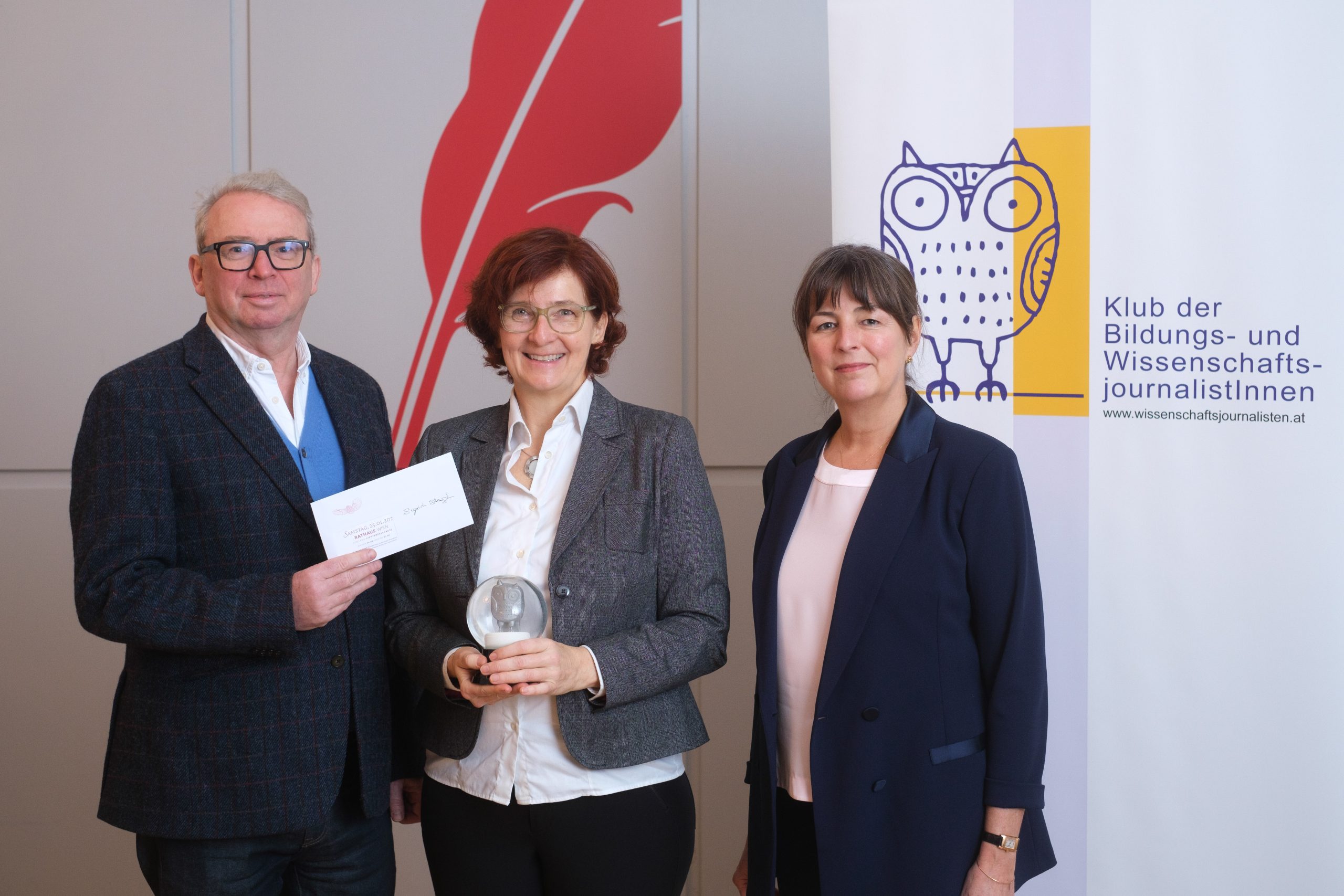
Ball organizer Oliver Lehmann, Sigrid Stagl, Scientist of the Year, and Eva Stanzl, chairwoman of the Club of Education and Science Journalists, at the Concordia Press Club / Photo: R. Ferrigato
The focus is of course on the well-deserved award as Scientist of the Year 2024, which Sigrid Stagl received today at the Concordia Press Club from the Club of Education and Science Journalists. But the economist at the Department of Socioeconomics at WU Vienna was also delighted to receive an invitation to the Science Ball that came with the award. Continue reading Sigrid Stagl: From the lecture hall to the ball room→
This website uses cookies to improve your experience while you navigate through the website. Out of these, the cookies that are categorized as necessary are stored on your browser as they are essential for the working of basic functionalities of the website. We also use third-party cookies that help us analyze and understand how you use this website. These cookies will be stored in your browser only with your consent. You also have the option to opt-out of these cookies. But opting out of some of these cookies may affect your browsing experience.
Necessary cookies are absolutely essential for the website to function properly. This category only includes cookies that ensures basic functionalities and security features of the website. These cookies do not store any personal information.
Any cookies that may not be particularly necessary for the website to function and is used specifically to collect user personal data via analytics, ads, other embedded contents are termed as non-necessary cookies. It is mandatory to procure user consent prior to running these cookies on your website.